

Hello and welcome to the February 2021 edition of Smith Goodfellow’s Industry Insights. Another month has flown by in the blink of an eye and as the gears are set in motion for a pathway to post-covid recovery, we’re taking a look at the good, the bad and the interesting of where the industry stands right now.
In this month’s edition you’ll find some thoughts on the Green Homes Grant fiasco, the NFRC’s 6-point plan for the Chancellor to support the roofing and cladding sector, and how COVID-19 has shaped a generation of resilient designers and changed how we think about our built environment. We’re also providing a handy round up of the many significant industry consultations and surveys currently running, making it easy for you to have your say.
Back in October last year it was clear that the government’s Green Homes Grant ambitions had hit a stumbling block, with as many as 80% of homeowners unable to find local registered installers to carry out qualifying work. Some hope was felt that more might be able to take advantage of the stimulation package with the extension of the scheme for a further 12 months beyond the original March 2021 cut-off date. That small hope was short lived, however, as the government has since revealed that it will be withdrawing hundreds of millions from the promised £2bn fund at the end of next month.
Long delays in giving out grants has seen 95% of the £1.5bn homeowner pot left unspent, but rather than rolling that promised funding over into the next financial year, the government has taken the decision to withdraw the underspend. The extended scheme will instead draw from a much-reduced pot of only £320m. Given that the Green Homes Grant was promoted by Boris Johnson as a key element of his 10-point green recovery plan, this decision seriously calls into question how committed the government actually is to ‘build back better’. In fact, in their plans for a supposed “green industrial revolution”, the government seem to have fallen into the trap of rehashing old promises – but with much reduced budgets.
There has already been much discussion of the government’s reluctance to follow through on its manifesto pledge of a £9.2bn investment in “improving the energy efficiency of homes, schools and hospitals”. With Johnson’s 10-point plan budgeted at a total £12bn investment, including energy efficiency measures for homes and public sector buildings, the promises to prioritise green recovery are starting to seem a little lack lustre.
In addition to the issues with funding withdrawal and reduction, the Green Homes Grant initiative is also falling far short of its ambitions for job creation in the industry. Poor administration of the scheme has meant that not only could homeowners not find registered tradespeople, resulting in only 8% of the targeted 600,000 households being able to take advantage of the grant, but those companies who have undertaken work in good faith now find themselves tens, or even hundreds, of thousands of pounds out of pocket, due to delays in payment from the fund. Businesses that invested time and money in preparation for supporting the scheme have now had to lay off staff and remain unpaid for work carried out – the complete opposite of the scheme’s promised results.
For an industry that has worked hard to survive a turbulent year, demonstrating true agility and innovation in the face of incredible challenges, this litany of disasters is insulting to say the least. The sector is ready, willing and able to work for positive change that will support a green recovery, with a genuine appetite to improve standards and safeguard both our environment and our economy. But it cannot bring these changes about without genuine commitment and comprehensive support from the government – it’s time those obligations were met.
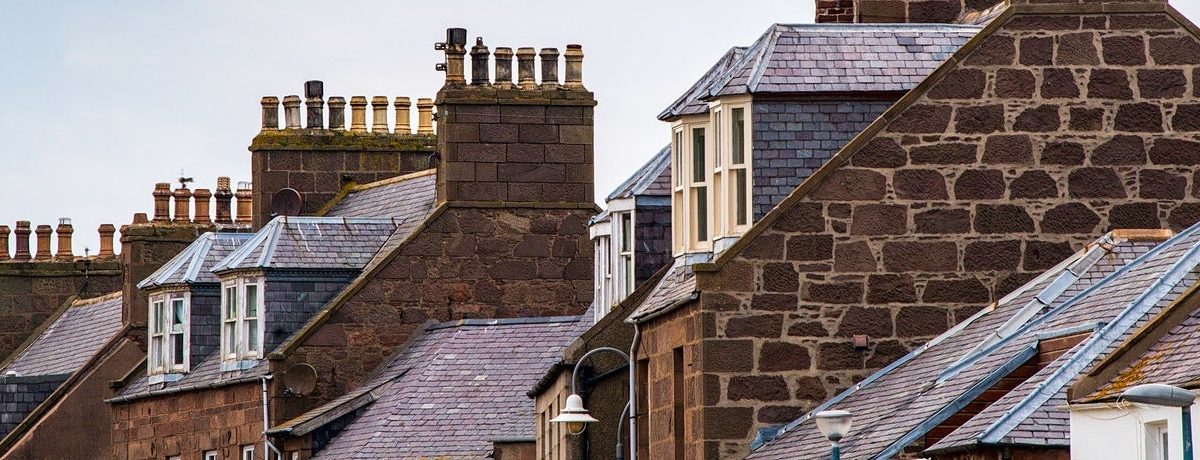
The National Federation of Roofing Contractors (NFRC) has published a ‘Six Point Plan’, outlining for the Chancellor what is needed to support the roofing and cladding industry to build back better, greener and safer, following the COVID-19 pandemic.
With the Chancellor, Rishi Sunak, due to set out the Spring Budget on 3rd March, the NFRC is calling for investment in policies that will stimulate the construction industry whilst also supporting the UK to meet it’s 2050 net-zero commitments and helping to improve building safety.
The six-point plan urges the Chancellor to take steps that will invest in futureproofing the UK’s building stock. The plan asks the following:
You can read the full NFRC Six Point Plan here.

The last year has delivered many challenges but, as is often the case, there are many who have found their skills, knowledge and outlook forged in the fires of that turbulence. A recent survey delivered by Dezeen and Bath School of Design sought to understand the impact of the pandemic on students’ studies and well-being, and revealed some interesting trends in ways of working.
Although students reported finding concentration and motivation negatively impacted, along with an increase in mental health difficulties, there was also a clear feeling that their experiences during lockdown had honed their creativity, resilience and resourcefulness. In particular, students noted having learned new skills, such as 3D modelling and rendering, that they otherwise would not have picked up – or at least not to the same degree of competence. The challenges of designing within the restrictions of the pandemic has led students to deeply consider what it means to be a designer. Focusing on adaptability and working with materials they had to hand has reinforced the solutions driven mindset that makes for excellent designers.
This re-examining of the importance of adaptable design is echoing beyond the virtual classroom and shaping how designers around the world consider what and how they design as we look towards recovery. Within the built environment, it is by no means the first time that design has been influenced by a new understanding of disease. Haussmann’s renovation of 1800s Paris, London’s reconfigured infrastructure in the wake of the city’s 1854 cholera epidemic, and 19th-century New York’s reaction to the squalid conditions of tenement housingare just some of the many examples of how architectural and planning trends have been reconfigured in response to health crises.
COVID-19 has, once again, prompted a reimagining of what the spaces and places we live and work in should look like and how they need to operate. Concepts such as ‘the 6 feet office’, which uses carpet tiles to visually demarcate social-distancing guidelines and one way systems in and out of conference rooms, are already being rolled out in order to create safer ways of returning to work. Meanwhile, the infrastructure of cleanliness has been brought to the forefront of design, with automatic hand sanitiser dispensers, touchless technology and anti-bacterial fabrics and finishes becoming staples in public spaces.
Beyond the configuration and functional design of individual buildings, the pandemic has likewise brought home the importance of space in urban planning. As The New Yorker’s Kyle Chayka beautifully puts it, “quarantine turns us into explorers of the familiar”. Being restricted to our local areas has resulted in a new kind of occupation of public spaces and, just as we have become hyper aware of the flaws in our own homes, we have come to recognise the limitations of those public spaces, too. Local infrastructure such as parks and playgrounds has come under scrutiny – and their absence keenly felt by many inner city communities. Urban areas normally dominated by vehicles were suddenly emptied of their traffic and some embraced the opportunity to reclaim the streets. For example, New York City made 40 miles of streets pedestrian only, in order to expand access to outdoor spaces outside of parks. It will be interesting to see whether the trend of pedestrianisation is one that continues as we are allowed to move beyond our immediate neighbourhoods once more.
Exactly what the long-term design impacts of the pandemic will be remains to be seen but with the world at a seemingly pivotal point for economic, environmental and social change, we’ll be looking to our designers with excitement as they bring forth the ideas that will see our world re-imagined.

There’s an awful lot happening in construction right now and, with so many opportunities to provide input on key changes that will impact the future of the industry, we thought we’d share a handy list of what’s currently in consultation.
We know that responding can be time consuming but it’s essential that these consultations get as wide and comprehensive a response as possible to ensure informed decisions are made. We hope you’ll take the time to participate wherever possible and help shape the sector for the better.
Hello and welcome to the February 2021 edition of Smith Goodfellow’s Industry Insights. Another month has flown by…

Welcome to the first Industry Insights of 2021 – it’s hard to believe that a month has already…
As communicators specialising in the built environment, the arrival of the proposed Code for Construction Product Information (or…

